


Decoding the Tech: The Difference Between BEV, PHEV, and EREV in Chinese Cars
The global automotive landscape is changing rapidly, and nowhere is this more evident than in China. If you have been browsing the latest models from brands like BYD, Li Auto, or Zeekr, you have likely encountered a confusing alphabet soup of acronyms: BEV, PHEV, and EREV.
For international buyers, understanding these technologies is crucial. It is not just about how the car moves; it is about how the vehicle fits into your local infrastructure, your driving habits, and the climate where you live. This guide breaks down these technologies to help you understand what powers the next generation of vehicles.
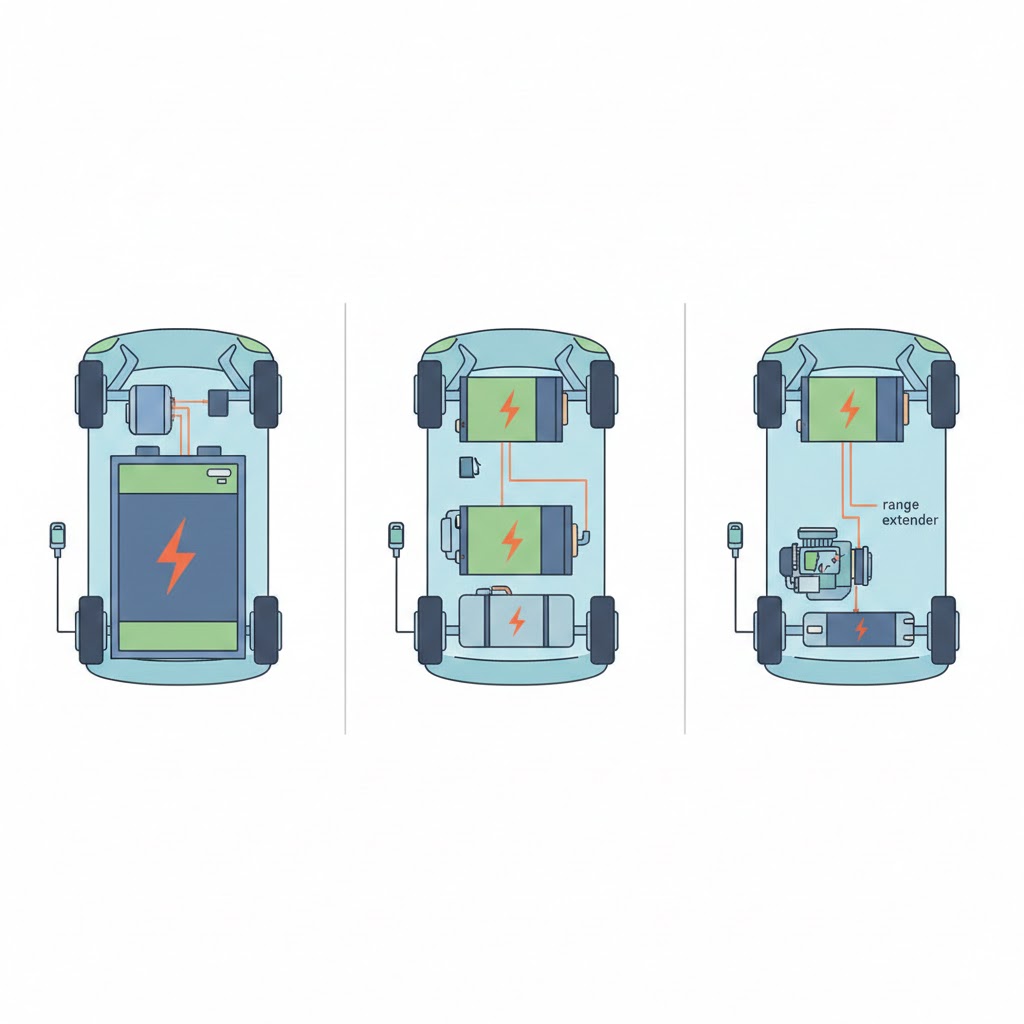
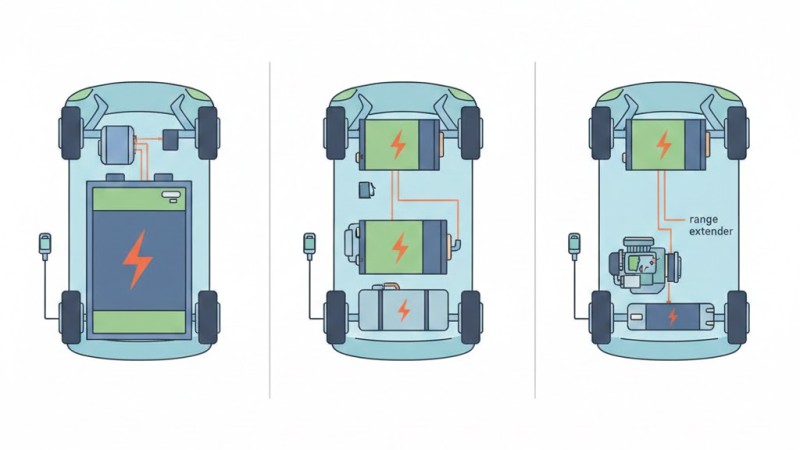
Visual comparison of powertrain structures
1. BEV (Battery Electric Vehicle)
The Pure Player
A BEV is what most people think of when they hear "electric car." It runs entirely on electricity stored in a large battery pack. It has no combustion engine, no fuel tank, and produces zero tailpipe emissions.
Key Characteristics: Silent operation, instant torque, and lower maintenance costs due to fewer moving parts.
Chinese manufacturers have pushed the boundaries of BEV technology. Brands like Zeekr and Xiaomi are producing BEVs with ranges exceeding 700km and charging speeds that can add hundreds of kilometers of range in under 15 minutes. This technology is ideal for regions with well-developed charging infrastructure.
2. PHEV (Plug-in Hybrid Electric Vehicle)
The Best of Both Worlds
PHEVs bridge the gap between traditional gasoline cars and electric vehicles. They possess both an electric motor (with a medium-sized battery) and a gasoline engine. You can charge them via a plug, allowing for daily commuting on pure electricity (usually 50-100km), while the gas engine takes over for long road trips.
BYD is a global leader in this space with its DM-i (Dual Mode) technology. The system prioritizes the electric motor for efficiency, using the gasoline engine primarily to assist. This results in exceptional fuel economy even when the battery is depleted.
3. EREV (Extended Range Electric Vehicle)
The Specialized Solution
This is perhaps the most unique category gaining traction in the Chinese market, popularized by brands like Li Auto (Lixiang). An EREV is technically an electric vehicle because the wheels are always driven by the electric motor.
However, it carries a gasoline generator (range extender). Unlike a PHEV, this gasoline engine is not connected to the wheels. Its sole purpose is to generate electricity to charge the battery or power the electric motor directly.
Why is it popular? EREVs offer the smooth, powerful driving experience of an EV without range anxiety. For markets like Central Asia or Russia, where charging stations may be sparse between cities and winters are cold, EREVs provide a practical solution.
Quick Comparison: Which Tech Fits Where?
| Feature | BEV (Pure Electric) | PHEV (Plug-in Hybrid) | EREV (Extended Range) |
|---|---|---|---|
| Power Source | Battery Only | Battery + Engine | Battery + Generator |
| Wheels Driven By | Electric Motor | Motor or Engine | Electric Motor Only |
| Best Use Case | City driving & areas with good chargers | Mixed use (City + Highway) | Long distances & Cold climates |
| Example Models | Zeekr 001, BYD Seal | BYD Song Plus DM-i | Li Auto L7, L9 |
Conclusion
The rise of the Chinese automotive industry has brought diversity to the market. There is no single "best" technology; the right choice depends entirely on your specific environment. Whether you prioritize the absolute silence of a pure electric BEV, the versatility of a PHEV, or the long-range security of an EREV, modern manufacturing offers a solution tailored to every need.
As battery technology continues to evolve and infrastructure improves globally, the lines between these categories may blur, but for now, understanding these distinctions ensures you make an informed decision for your next vehicle purchase.